Creativity in the Age of AI
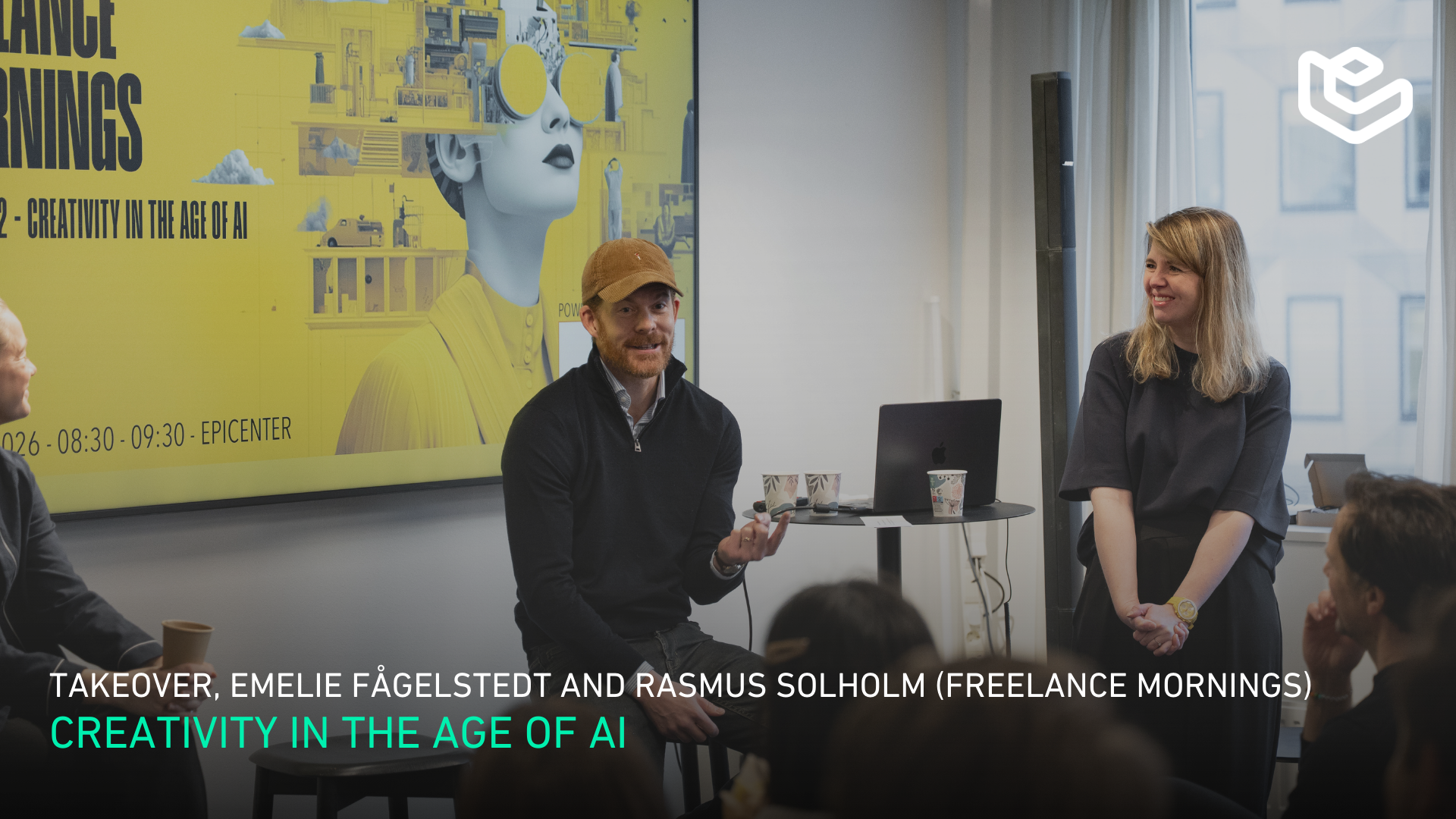
On March 5th, more than 50 freelancers showed up early — before most people had finished their first coffee — to talk about something that's quietly rewriting the rules of creative work.
Designers, writers, developers, strategists, digital creators. Different crafts, same underlying question: what does creativity actually mean when a machine can generate a draft in thirty seconds?
Hosted by Rasmus Solholm and Emelie Fågelstedt, the morning featured a panel conversation with Amalia Berglöf and Clara Nordlander Wiberg, followed by an open discussion that, by most accounts, went exactly where those conversations need to go — honest, practical, a little uncomfortable in the right way.
The question has already changed
For most people in the room, the debate about whether AI will affect their work is over. It already has. The more interesting question — the one the morning kept circling back to — is how you choose to meet that shift. With defensiveness, or with something more useful.
Judging by the energy in the room, curiosity seems to be outrunning fear. That's not naïveté. That's a strategic choice.
Where creativity is moving
One of the cleaner insights from the morning: AI doesn't eliminate creativity, it relocates it. When production gets faster and cheaper, the value doesn't disappear — it shifts. Taste, judgment, direction, the ability to know what good looks like and steer toward it — those things become more important, not less.
The freelancers already feeling this shift described their work moving away from producing the first version of something toward shaping the concept, defining the idea, guiding the outcome. Less execution, more direction. That's not a demotion. For a lot of people in the room, it sounded like a better job.
Rethink the offer, not just the tools
A thread that ran through both the panel and the open discussion: the most useful lens right now isn't "how do I protect what I already do?" It's "which parts of what I do could actually be done differently — or better?"
That's a harder question to sit with. But it's the right one. Freelancers who are asking it are finding space to reposition. Those who aren't are mostly just waiting to be squeezed.
AI handles the repetitive work well — research, formatting, early drafts, the mechanical parts of a creative process that eat time without producing much original thinking. Automating those creates room. What you do with that room is still entirely up to you.
Expertise amplifies, it doesn't get replaced
One pushback worth naming: AI doesn't flatten the playing field as much as the headlines suggest. In practice, it tends to amplify the people who already know what they're doing. If you understand your craft, you can guide these tools toward something good. If you don't, you mostly get faster mediocrity.
The same applies to relationships. When content, visuals and ideas can be generated at scale by almost anyone, the human dimension of work becomes a differentiator. Who you work with, the trust you've built, the collaborations that actually go somewhere — those may matter more now than at any point before.
What the morning suggested
No single answer came out of the room. That was probably the point. But the direction of the conversation was clear enough: the freelancers navigating this well aren't the ones with the best AI stack. They're the ones who've thought clearly about where their value actually sits — and made moves accordingly.
The next Freelance Mornings event is on May 28. If the March edition is anything to go by, it's worth showing up early.
FAQ
Q: What is Freelance Mornings? A: A Stockholm-based community for freelancers and independent professionals, founded by Rasmus Solholm and Emelie Fågelstedt. The initiative runs morning events bringing together people across tech, creative industries and entrepreneurship to discuss the future of work.
Q: Who spoke at the March 5th event? A: The panel featured Amalia Berglöf and Clara Nordlander Wiberg, hosted by Rasmus Solholm and Emelie Fågelstedt. The panel was followed by an open discussion with the audience.
Q: Is AI replacing freelance creative work? A: That wasn't the consensus in the room. The more useful framing: AI is relocating creativity — shifting value away from production toward direction, judgment and taste. Expertise still matters, arguably more than before.
Q: When is the next Freelance Mornings event? A: May 28, 2026, in Stockholm.